
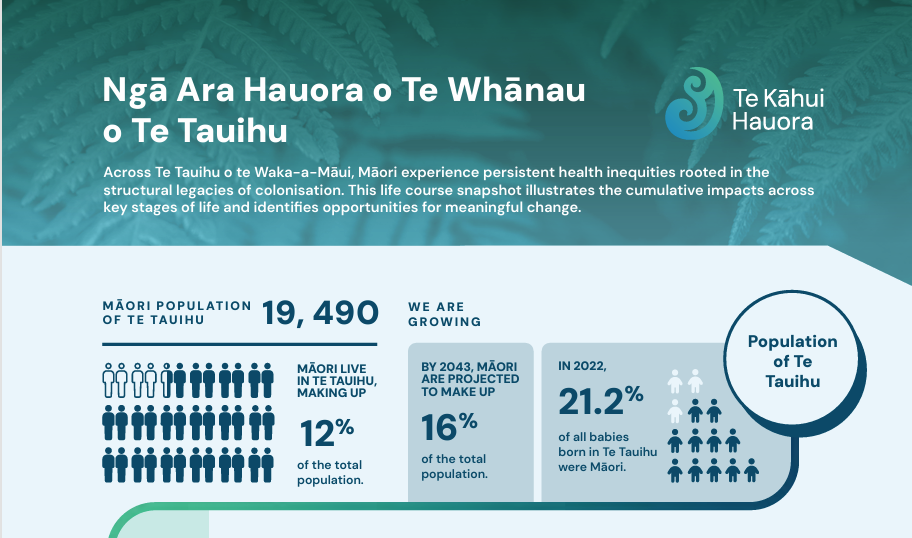
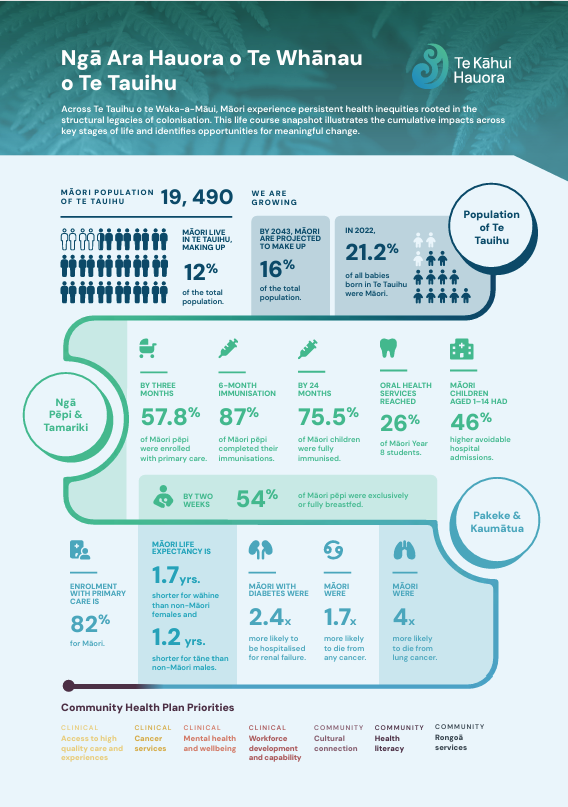
Ngā Ara Hauora o Te Whānau o Te Tauihu
Across Te Tauihu o te Waka-a-Māui, Māori experience persistent health inequities rooted in the
structural legacies of colonisation. This life course snapshot illustrates the cumulative impacts across key stages of life and identifies opportunities for meaningful change.

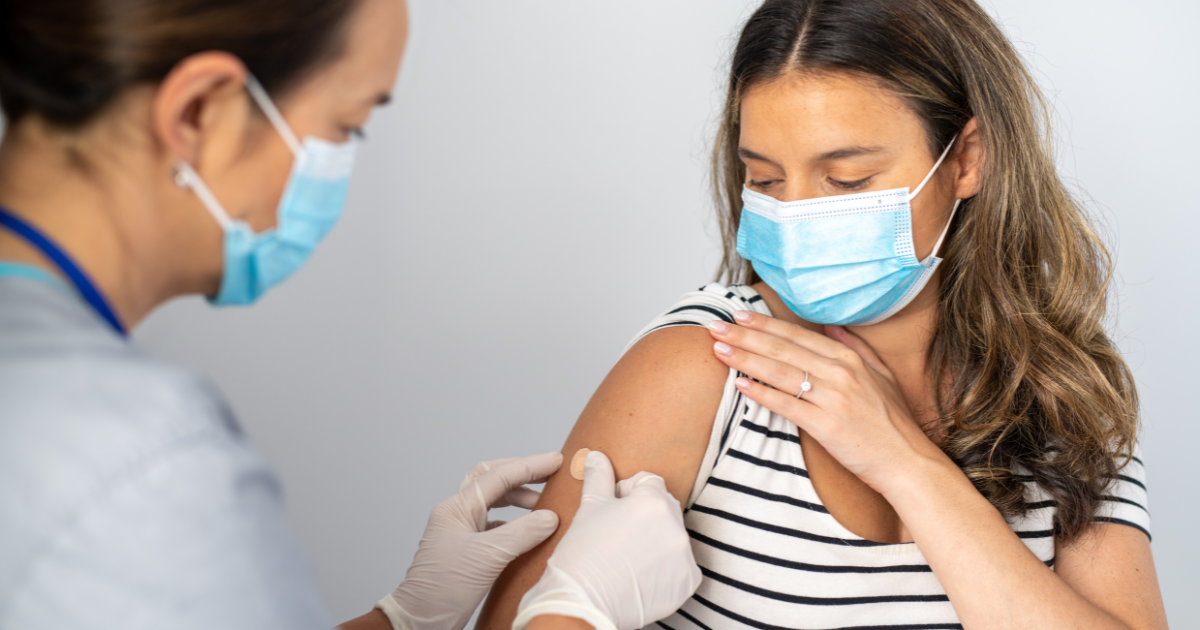
Stay protected against pertussis
Pertussis (whooping cough) is an illness we need to protect against. It is highly contagious and can cause serious harm to pēpi and older adults. A pertussis epidemic, which was declared in November 2024, is ongoing in Aotearoa New Zealand with significant numbers of people continuing to be affected across the motu.
Antenatal immunisations are free and are recommended from 16 weeks of every pregnancy. Pertussis boosters are also given at 11 years, 45 years (if fewer than four tetanus doses previously), and 65 years in addition to the routine childhood immunisation schedule.
Immunisation is available from your GP, Hauora Māori service, by many midwives, or at most vaccinating pharmacies.

Health funding warning
Kaitiaki Hauora released new economic analysis ahead of Budget 2026, warning New Zealand’s public healthcare system remains significantly underfunded, with planned increases in health spending unlikely to meaningfully improve access to care. The analysis found New Zealand spends around $1.1 billion less per year on health than comparable OECD countries with similar public healthcare systems.
The Government announced $1.370 billion in additional health funding for the coming year in Budget 2026, equivalent to $5.48 billion over four years. However, the report shows much of that increase is likely to be absorbed by rising costs, population growth and demographic pressures.
A pre-Budget Cabinet paper also indicated new and expanded services are expected to be funded from within that same allocation. According to Kaitiaki Hauora, that means many existing services are likely to remain under pressure, with current challenges across the health system expected to continue or intensify.
Future of work
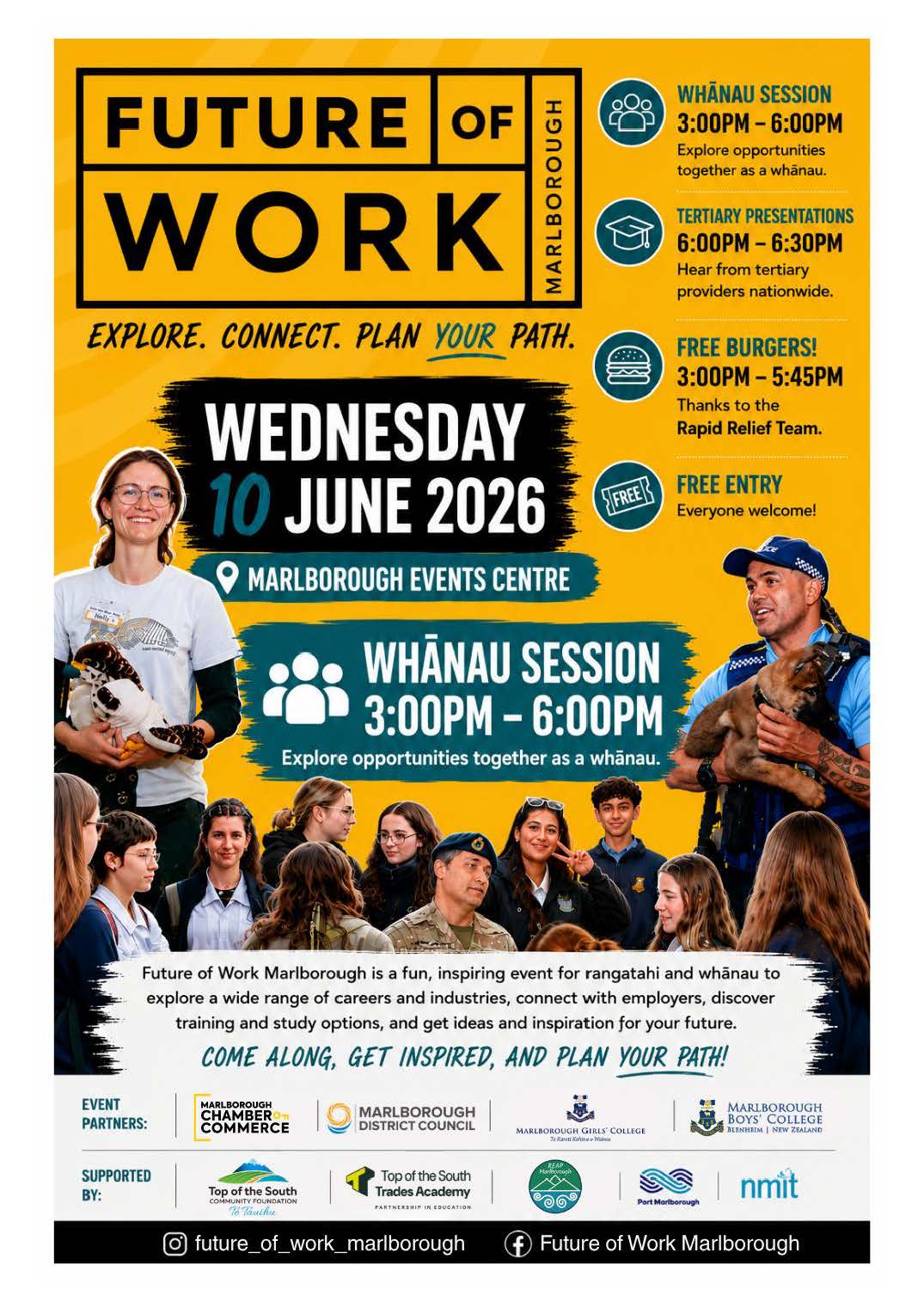
Manu Ora will join the Marlborough PHO, Te Whatu Ora Nelson Marlborough, and Churchill Hospital at Future of Work 2026 this week in Blenheim to support local rangatahi to explore pathways into health.
“We see this as a very important opportunity to awhi young people as they consider their futures, help them connect with health professionals, and imagine the positive impact they can have for whānau and hapori,” said Dr Sara Simmons, Mātanga Rata at Manu Ora.
“We’ve been involved in Future of Work since it began in 2019, and this mahi has already paid dividends, with local young people who hadn’t otherwise considered careers in health succeeding in their studies and joining the workforce.” Please share the word and encourage whānau to attend Future of Work, especially the “Whānau Session” being held from 3pm to 6pm on Wednesday, June 10 at the Marlborough Events Centre.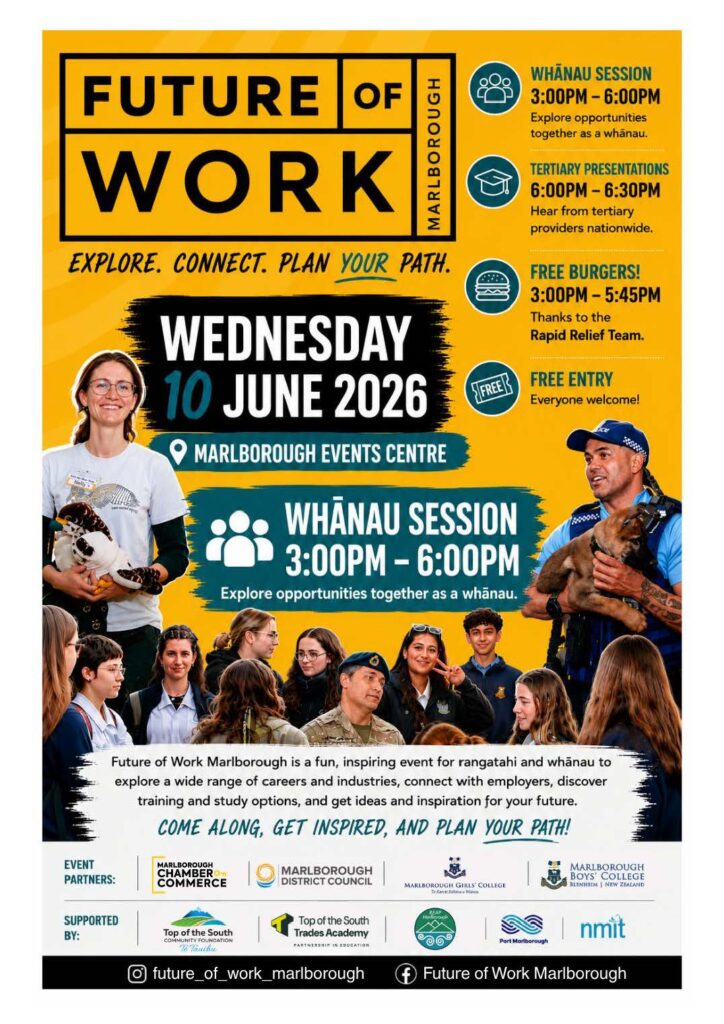

Proposed Pharmac changes risk deepening inequity
Te Kāhui Hauora IMPB is pushing back on Pharmac’s proposal to remove priority access to type 2 diabetes meds for Māori and Pacific peoples.
Pharmac is proposing to widen access to three type 2 diabetes medicines from August, and we applaud that, but in the process, the criteria that enable access to Māori and Pacific people are to be removed.
Equity mechanisms within the health system did not emerge by accident. They have been developed in response to longstanding evidence that equal treatment within an unequal system was not delivering equitable outcomes for Māori.
Targeted access to SGLT2 inhibitors has demonstrated significant reductions in mortality risk for Māori and Pacific peoples, while earlier treatment may delay progression to dialysis by up to 15 years. This is not preferential treatment. This is clinically justified and potentially life-saving intervention.
The initial two-week consultation period on the proposal has now been extended to Thursday, June 11, 2026. You can have your say here.